


Thermoplastic Polyurethane (TPU) is a versatile, high-performance elastomer that bridges the gap between flexible rubber and rigid plastics. Its unique combination of properties makes it an indispensable raw material across a multitude of industries, from automotive to consumer electronics.
What are the Core Properties of TPU Material?
TPU stands out for its exceptional balance of performance characteristics, making it a go-to choice for products that demand both durability and flexibility.
Superior Durability
Excellent abrasion, tear, and impact resistance ensures longevity even in harsh conditions.
High Elasticity & Flexibility
TPU can be stretched repeatedly and will return to its original shape, providing comfort and functionality.
Chemical Resistance
It offers strong resistance to oils, greases, and many common solvents, maintaining integrity in industrial environments.
Wide Hardness Range
TPU is available in a broad spectrum of hardness levels (durometers), from soft, gel-like compounds to hard, rigid plastics.
Aesthetic Versatility
The material can be easily colored and processed to achieve transparent or matte finishes, offering great design freedom.
Processing Efficiency
As a thermoplastic, TPU can be processed using conventional methods like injection molding and extrusion, enabling efficient, high-volume production.
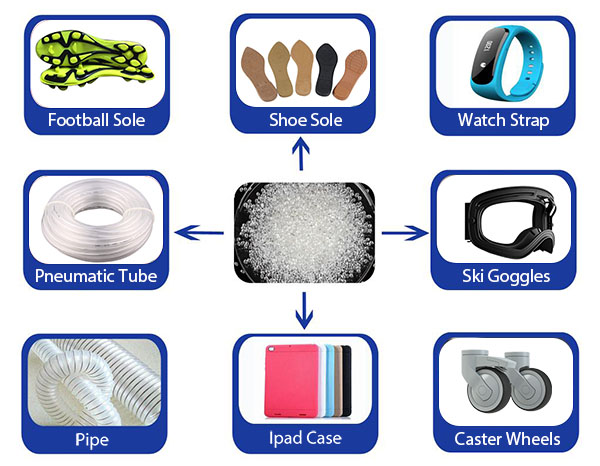
Exploring the Main Types of TPU
The chemistry of TPU can be tailored to meet specific application requirements. The most common types are based on polyester and polyether polyols.
| TPU Type | Key Characteristics | Ideal Applications |
|---|---|---|
| Polyester TPU | High tensile strength, excellent abrasion and tear resistance, good oil resistance. | Industrial belting, caster wheels, automotive components, hydraulic seals. |
| Polyether TPU | Excellent hydrolysis resistance, low-temperature flexibility, and microbial resistance. | Medical tubing, wire and cable jackets, outdoor sports equipment. |
| Aliphatic TPU | Superior UV stability and non-yellowing properties, maintaining color and clarity over time. | Automotive exterior parts, protective films, and applications requiring long-term aesthetic appeal. |
Common Applications of TPU Material
Thanks to its remarkable versatility, TPU is integral to countless products we use every day.
Automotive
Interior parts like dashboards and door panels, as well as exterior elements like body side moldings and protective films.
Footwear
Durable and comfortable shoe soles, foamed midsoles, and upper components for sports and casual shoes.
Electronics
Protective cases for phones and tablets, cable jackets, and soft-touch grips for electronic devices.
Industrial
Seals, gaskets, hoses, and caster wheels that require high durability and chemical resistance.
Medical
Biocompatible grades are used for medical tubing, catheters, and wearable health monitoring devices.
Sporting Goods
Used in ski boots, inline skates, protective gear, and as coatings for sports equipment.
Conclusion
Thermoplastic Polyurethane (TPU) is a powerhouse material that delivers an unmatched combination of durability, flexibility, and processability. Its ability to be tailored for specific needs makes it a preferred choice for manufacturers aiming to create long-lasting, high-performance products. As industries continue to demand lightweight and sustainable solutions, the popularity and applications of TPU will only continue to grow.
Ready to innovate with a superior material? Contact our team to explore how TPU can elevate your next project.